

Navy making good on pledge to clear water of contamination
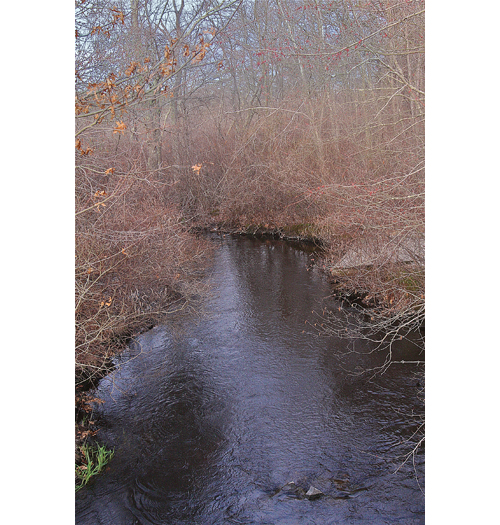
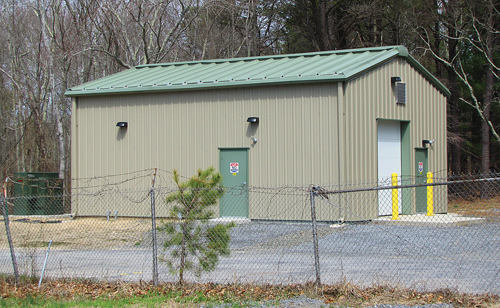
A multimillion-dollar chemical treatment facility currently pumping toxic contaminated groundwater from the Enterprise Park at Calverton — left over from years of pollution at the former Grumman site — is meeting its goals thus far, officials said last week. And while the large plume is not traveling underneath the Peconic River, as feared when it was first reported five years ago, it will take several more years of treatment before it is cleaned up.
The pump-and-treat system now operating at the southern end of EPCAL is removing 99 percent of the contaminants in the water being treated, good for 19 pounds of dangerous chemicals so far, officials said. Installed last October, the $4.6 million system that is remediating a plume headed toward the Peconic River will be in operation for at least another two to four years — assuming all goes as planned.
The treatment facility is designed to clean up contaminants that were left behind by the Grumman Corporation when the company built and tested aircraft at the Naval Weapons Industrial Reserve Plant.
The plume, which was first reported by the News-Review in March 2009, is moving southeast from the Grumman site, and has already extended south of the property onto private land and neighboring county parkland. Traces of the contaminants, known as volatile organic compounds, or VOCs, have been found in the Peconic River and in wells at the Peconic River Sportsman’s Club. The town has since extended public water to the club. There are no other private wells in the area
 At the time of the initial News-Review report, residents and environmentalists serving on an advisory council called a Restoration Advisory Board expressed concern that the U.S. Navy appeared willing to wait for the VOCs to disappear on their own rather than take steps to remove them.
Eventually, after the newspaper reports and pressure from locally elected federal officials including Senator Charles Schumer, the Navy agreed to the current plan to treat the water, which was approved in 2012.
The treatment facility uses two extraction wells to suck up groundwater from the site at the rate of 100 gallons per minute. The VOCs — which are harmful to humans and wildlife — are then removed through a process called air stripping and the treated water is injected back into the ground.
“So far, we’re in compliance with all of our discharge goals, and the air stripper’s [VOC] removal efficiency is greater than 99 percent,” said Jen Good of E&S Environmental Services, which is working on the project.
Ms. Good spoke at last Thursday’s biannual meeting of the Restoration Advisory Board for the EPCAL cleanup project.
“In the first six months, we’ve removed about 19 pounds of volatile organic compounds from the groundwater,” she reported.
Because the plume shifts from time to time, the groundwater extraction wells have a capture zone that scientists feel should still be large enough to capture the plume, according to Dave Brayack of Tetra Tech, another consultant on the site.
“There’s always a possibility it could do something we’ve never seen in the past,” Mr. Brayack said. “We’ll keep monitoring it, but the big thing is, if we are continuing to capture mass [VOCs], then we know we are intercepting the plume. The original source area [of pollution] was cleaned up several years ago. We’ve done some calculations that suggested that within several years, there should be nothing more coming down and, at some point, we’ll stop seeing mass. And when we stop seeing mass, we’ll have to make sure the plume hasn’t shifted on us, and if not, at that point we’ll look at shutting [the treatment facility] down.”
Asked by county Legislator Al Krupski (D-Cutchogue) how long it will take to treat all the groundwater “to everyone’s acceptable level,” Mr. Brayack said, “We’ve done the calculations, and the calculations say that’s somewhere between two and four years. But it’s based on assumptions. This system will run as long as it needs to run, so two to four years is really the minimum.”
After the meeting, Mr. Krupski said, “I’ve got a pretty good background in soils and soil chemistry, so I understand what they are talking about, and I’m pretty impressed with the way they’re doing the operation. It seems like their treatment methods are effective. It’s just a matter of them finishing the job.”
The Navy’s tests also indicate that the plume has not traveled under the Peconic River, Mr. Brayack said. When news of the plume first broke five years ago, there was concern that if contaminants ran deep enough in local groundwater, they could flow under the river into neighborhoods farther south.
The primary contaminants in the plume come from jet fuel and chlorinated solvents that were dumped on the land when Grumman operated there from 1954 to 1995, according to James Tarr of the Naval Facilities Engineering Command, which is leading the cleanup.
“This is where they pressure tested the fuel lines on the aircraft, and they leaked,” Mr. Tarr said last week.
“Petroleum constituents usually don’t make it too far” from where they’re spilled, he said. “But chlorinated solvents have a tendency to run with the groundwater, and they don’t degrade very well.”
The Navy, which turned over most of the former Grumman land to Riverhead Town in 1998, retained ownership of four properties there where cleanup was required due to contamination from the Grumman days.
In 2007, the Navy turned one of those properties, a 144-acre site that had been deemed clean, over to the town. The three remaining parcels the Navy owns at EPCAL are 169 acres adjacent to land sold by the town to developer Jan Burman, 30 acres on the southern boundary near Grumman Boulevard/River Road and nine acres surrounded by Mr. Burman’s property.
In addition to the plume that’s traveled off site, the Navy is cleaning three other sites at EPCAL, including an old munitions dump on the southwest portion of the property, where soil excavation is expected to start in May.
Also being cleaned is an old fuel depot site within Mr. Burman’s acreage. This site has been treated since 2005 by an “air sparging” system and soil vapor extraction. But that system, which had been operating seasonally, may be near the end of its functional life, according to Mr. Brayack, because the blower burned out and will need a major overhaul to get it working again. That system, he said, was designed for four years of use and has been in operation for close to eight.
There are a number of test wells in the area to measure the amount of contaminants in the groundwater there, he said.