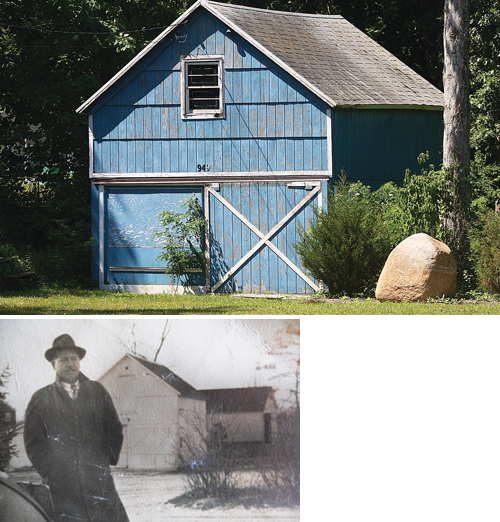
Real Estate: Recording Flanders history, in homes
Did you know that the David W. Crohan Community Center in Flanders was once the site of a roller rink known as Ben’s Roller Dome? Or that the long-shuttered Bayview Market at the corner of Longneck Boulevard and Flanders Road was built in 1910 and was used as a meeting room for the Flanders Fire Department when it first formed in 1948?
Were you aware that Flanders, which has long sought its own Zip code, actually had its own post office for almost 100 years until 1929, when the U.S. Postal Service decided to forward Flanders mail to Riverhead?
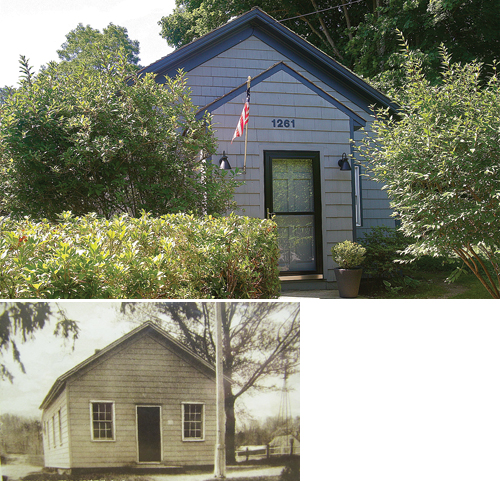
Or that the house next to the Flanders Cemetery was the Flanders School House from 1886 to 1959, before the Riverhead school district centralized? Or that a few lots to the east of that was a building used as a school bus barn?
These are just some nuggets of local real estate knowledge to be gleaned from the Flanders Hamlet Heritage Area Report, published by Southampton Town’s Landmarks and Historic Districts Board. On June 24, the Town Board formally approved the creation of the Flanders Heritage Resource Area, as defined in the report.
The report gives a brief overview of some of the history of Flanders and highlights 104 existing structures that are deemed to have historic value.
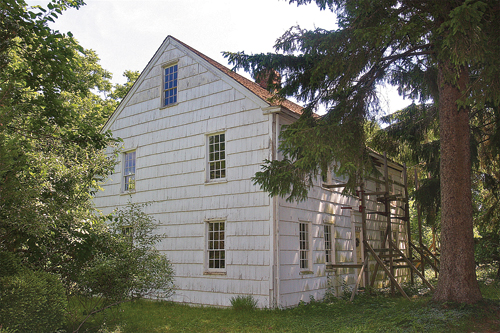
Many of the buildings in the report are residences today but were schools, post offices or stores in years gone by. Some are more than 200 years old, like the Benjamin House on Flanders Road across from Pleasure Drive, which was built in 1782 and is listed on the National Register of Historic Places.
A few are now in bad shape, including the Brewster House, a three-story former boarding house near the Flanders Memorial Park that was built in 1880 but has been vacant and falling apart in recent years.
Others buildings mentioned in the report were deteriorating but have been rebuilt or restored, such as the two barn buildings on the Big Duck Ranch. Just last week, the town accepted a $10,000 donation from Martin Maurer, whose family originally owned the Big Duck, to aid in the restoration of a Victorian barn on the property.
Unlike a Historic District designation, the Hamlet Heritage Area Report focuses more on celebrating old buildings than on preservation, according to Sally Spanburgh, chair of the Southampton Town Landmarks Board.
“That’s a very important distinction,” Ms. Spanburgh said at the June 19 Town Board work session, where the report was discussed. “These are heritage areas. They are honorary recognitions of the special character and history of a particular hamlet. They’re distinctly different from a historic district, which requires owner consent and is layered with restrictions and preservation tools. These are much more celebratory about a hamlet’s historic and character and pride of place, and are really great tools for the community.”
The town landmarks board has done similar heritage area reports for several other hamlets in Southampton Town, and hopes to do one for each of the town’s 15 hamlets, Ms. Spanburgh said.
The heritage areas also don’t have the same stringent criteria for inclusion as a historic district or even the townwide survey of historic resources that’s currently underway, Ms. Spanburgh said.
“In order to be included in a heritage area report, we’re not too picky,” she said. “It can’t be falling down, but it doesn’t have to rise to a certain level of integrity [that a National Register of Historic Places property does]. It could be covered in vinyl, it could have several additions, but if it is still representative of a particular narrative associated with that site, then it’s generally included if it’s still recognizable as its original self.”
The report was created with input from community members and civic organizations and will eventually be published on the Landmarks Board’s page on the town web site.
“I work at the Big Duck and I can tell you that many, many people come in who grew up in the area and lived in these old homes, and they are very interested in this information,” said Janice Young of Flanders, another a member of the Landmarks Board who worked on the report. “I found myself referring to it when it was even in draft form. I think it’s going to be a very useful tool.”
The Flanders report took six years to complete, Ms. Spanburgh said.
“They are very substantial documents, but they are terrifically appreciated by the residents that live in these areas and they help build pride of place. If somebody new moves into the community and wants to learn a little more about that particular hamlet, they can refer to these resources,” she said.
Gary Cobb of East Hampton, a former Landmarks Board member and a former president of the Flanders Village Historical Society, said that while the goal of heritage area reports is to identify historic structures and resources in a community, he wonders how successful they’ve been.
“These reports often sit on a shelf at Town Hall and nobody reads them,” Mr. Cobb said. “I’d like to see them be made more accessible — maybe have them for sale at the Chamber of Commerce or at the Big Duck.”