

Suffolk Closeup: Why the Island stayed green
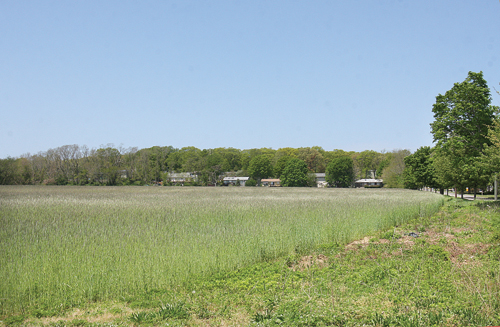
Who knew that the program that has become integral to saving eastern Long Island from the sprawl that has overtaken much of the western portion of the island — the Peconic Bay Community Preservation Fund (CPF) — has its origin in a program created on Nantucket by a native Long Islander?
I didn’t until I began researching the connections after a visit earlier this month to that island 30 miles out in the Atlantic off Cape Cod. With our sailboat or, a good deal less adventurously, by ferry, I’ve been to most of the islands east of Long Island — Block Island, Fishers Island, Cuttyhunk, Plum Island and Martha’s Vineyard. But I’d never been to Nantucket, and I’m here to report it is one exquisite place. And it will stay beautiful, since half of this t 3 1/2 by 14-mile island is preserved.
Much of the preserved space has come from donations of land or money to acquire property by several private organizations, but much of it, too, is a result of the island’s 2-percent real estate transfer tax earmarked for buying and saving open space. Vaguely I recalled that the CPF on Long Island, which is also based on the 2-percent model, had a Nantucket connection.
Yes, absolutely, confirmed State Assemblyman Fred W. Thiele, Jr. (I-Sag Harbor), who spearheaded the establishment of CPF and whose district includes Shelter Island. The Nantucket program began in 1999 and earlier this year reached a stupendous $1 billion mark in funds raised. That has gone to not only acquire open space and other environmentally sensitive land here, but development rights to preserve farmland and for historic preservation. At a time of declining or non-existent fiscal support from other levels of government for these purposes, CPF has made all the difference for the five East End towns.
“It’s clear that conservation could not have kept pace with development here without the CPF,” Mr. Thiele said.
How did Mr. Thiele begin working to make the CPF a reality? That starts with Judith Hope. It was 1984 and Ms. Hope, then East Hampton Town supervisor, had flown to Nantucket with her husband Tom Twomey, the recently deceased attorney.
On Nantucket she read about “this wonderful concept of a 2-percent transfer tax to preserve open space. We were very impressed,” recounted Ms. Hope from her East Hampton home. “I brought it to the Town Board.” She also asked Mr. Thiele, then East Hampton Town Planning Board attorney as well as town attorney of adjoining Southampton Town, to look into its applicability for Long Island.
Meanwhile, then East Hampton Councilman Randy Parsons had also read, independently, about the Nantucket program. The Town Board authorized a visit to Nantucket by Mr. Parsons, town planner Tom Thorsen and Peter Garnham, a real estate broker. Some real estate interests were uneasy about the 2-percent notion although Mr. Garnham believed the fears unfounded.
Three decades later, Mr. Parsons, an East Hampton resident now with the Nature Conservancy of Long Island now, comments: “Without the CPF and a dedicated fund for preservation, we would have had a different outcome. So thank you, Nantucket!”
Says Mr. Garnham of Amagansett, now a garden writer and farmer: “There was nothing for the real estate industry to be concerned about. And CPF fulfills a huge need.”
They met on Nantucket with its planning director, Bill Klein, a Long Island native who originated the program. Now retired, Mr. Klein, originally from Syosset and a nephew of former Suffolk County Executive John V. N. Klein, related going to Nantucket to become its planner in 1974.
“I was the first planner they ever hired,” said Mr. Klein from his home in Chicago (he also has a place on Nantucket). Having grown up in Nassau County in the 1950s, he had seen that section of Long Island enveloped in sprawl and had come to an early conclusion about development in Nassau that “this isn’t working.”
He completed an internship at the Nassau County Planning Commission and after graduating from Tufts University, received a master’s degree in regional planning from Penn State. Further informing his understanding of preservation was his uncle, John Klein, the creator of the Suffolk County Farmland Preservation Program. Started in 1974, the SCFPP is based on the purchase of development rights from owners of farmland. They receive the difference between what their land is worth as farmland and suburban subdivision and in return it remains in agriculture in perpetuity. It was a first-in-the-nation concept.
Before arriving on Nantucket, Bill Klein had worked as a planner for five years in State College, Pennsylvania.
There he learned about the half-to-one-percent real estate transfer tax set as a “local option” and used for general government revenue purposes by some Pennsylvania communities. With Nantucket heavily engaged in development when he arrived, he asked: Could a similar transfer tax be created for Nantucket, but its proceeds devoted to land preservation?
On the East End, the preservation of Nantucket more closely resembles what has happened on Shelter Island, the greenest of all East End towns, because of involvement by both major private and governmental initiatives. What was so important on Shelter Island, of course, was the acquisition of a third of the island, the Mashomack Preserve, by the Nature Conservancy in 1980.
This is the first of a two-part series. Click next for Part 2.
The model for the Peconic Bay Community Preservation Fund, which has become a key to the preservation of eastern Long Island and reached $1 billion this year, got its start when Bill Klein arrived on Nantucket in 1974 and saw the island “subdividing at a rate of 500 lots a year, most on 2 and 3 acre lots.”
Raised in Syosset, he had seen the mess that sprawl had made in the community and much of western Long Island. Mr. Klein, with a degree in planning from Penn State, also had an influence on his uncle, John V. N. Klein, who between 1972 and 1979 was Suffolk County executive. Mr. Klein recalls many family dinners with his Uncle John where “we’d chat about growth on Long Island” and what could be done to counter development sprawl. A central point was that “if you are really serious about preserving the rural character and guiding growth around existing villages, and stopping it cold elsewhere, you would have to strike out and do wild and crazy things.”
His Uncle John would create a landmark preservation undertaking, the Suffolk County Farmland Preservation Program, a first-in-the-nation plan to save farmland based on purchase of development rights. It’s been emulated across the nation.
When a 27-year-old Bill Klein arrived on Nantucket as its first planner, “there was really a kind of emergency going on,” he said, in the form of a development explosion. This is where “wild and crazy” came into being with the idea of a 2-percent real estate transfer tax paid by the buyer with proceeds dedicated to acquiring and preserving land. It was derived from a 1-percent transfer tax utilized for general revenue purposes that Mr. Klein knew about in his prior job as a planner in Pennsylvania.
To bring the idea of a transfer tax to Nantucket was “a daunting task,” he remembered, with a “consensus-building process” launched that included, in 1982, a three-day symposium on what Nantucket was “going to look like in 20 years.” Among those coming to Nantucket to speak at the symposium was John V. N. Klein.
A special law had to be passed by the Massachusetts Legislature. “Mike Dukakis was governor and he was strongly in favor,” Mr. Klein said. “One reason was that he and Kitty got married on Nantucket and he had a warm and fuzzy feeling about the island.”
The tax was approved with “near unanimity” by voters on Nantucket. It took effect in 1984. And that year, then East Hampton Town Supervisor Judith Hope, on a trip to Nantucket with her husband, the late attorney and environmental activist, Tom Twomey, read about it and brought the concept back to Long Island.
A huge roadblock to clear was getting approval from the New York State Assembly. “The statewide real estate lobby had come out against it in full force,” Ms. Hope said. “It was a long and difficult struggle.”
But in the 1990s she became New York State Democratic chair and personally interceded with longtime State Assembly Speaker Sheldon Silver, well-known for his tight grip on the movement of all legislation.
“It was the only thing I asked him for in my life,” recounts Ms. Hope. “I told him it could be a great legacy for you to be involved in saving thousands of acres of open space on eastern Long Island.”
So the measure got to the Assembly floor and passed, spearheaded by Assemblymen Fred Thiele Jr. of Sag Harbor and Tom DiNapoli (now state comptroller) of Great Neck Plaza, then chair of the Assembly’s Environmental Conservation Committee.
It had earlier passed the State Senate with Senator Kenneth LaValle (R-Port Jefferson) as its sponsor. Successful referenda were then held in each of the five East End towns.
“All things came together at a magic moment,” Ms. Hope said. And the 2-percent transfer tax, with funds raised going for open space, farmland and historical preservation, “has had profound and beneficial consequences for eastern Long Island,” she added.
It took effect in 1999 and has saved 10,000 acres so far. The Nantucket program, which has raised $286 million, has had a big part in preserving half of the island.
In addition to coming to Long Island, versions of the Nantucket plan have been adopted in places including Martha’s Vineyard, Block Island and Little Compton, Rhode Island. Mr. Klein said through the years he has given “talks around the United States” about the plan. But “getting their legislators to commit” to the concept was “mind-boggling.” Still, where it “has had application, it’s been dynamite.”
Surely, it’s a preservation initiative that should be adopted all over the U.S.
Senator LaValle, whose district includes Shelter Island, commented last week that “the Community Preservation is a mechanism that has enabled us to protect the East End’s environmental treasures. The CPF has been a tremendous success in preserving the lands and natural resources that are critically important for Long Island.”